


You're comparing two treadmills.
One says 2.6 CHP.
Another advertises 4 HP.
At first glance, the 4 HP treadmill sounds much more powerful.
But is it?
Not necessarily.
Treadmill motor specifications can be confusing because brands and retailers may use terms such as HP, CHP, peak HP, and DC motor power differently.
And motor power is only one part of choosing a good treadmill.
If you're looking for the best treadmill motor for home use, comparing CHP vs HP, or buying a treadmill in UAE, here's what those numbers actually mean—and what you should look at beyond horsepower.
What Does HP Mean on a Treadmill?
HP stands for horsepower.
It's a measurement of power used to describe the output of a treadmill motor.
You may see treadmill listings advertising:
-
2 HP
-
2.5 HP
-
3 HP
-
4 HP
-
5 HP
The problem is that an HP number by itself doesn't always tell you under what conditions that output was measured.
That's why buyers should avoid comparing two treadmills solely because one has a bigger HP number.
What Does CHP Mean on a Treadmill?
CHP stands for Continuous Horsepower.
It is intended to describe the motor's ability to deliver power continuously during operation rather than simply referencing a short-duration maximum.
For treadmill buyers, CHP can therefore be a useful specification when comparing machines whose manufacturers report motor performance using the same standard.
For example, the current NordicTrack T Series 5 listing at Athletix specifies a 2.6 CHP DC motor.
That gives buyers more context than seeing only a large headline horsepower number.
CHP vs HP: What's the Difference?
The main difference is how the power figure is presented.
HP is a general unit of power.
CHP refers specifically to continuous horsepower in treadmill marketing and specifications.
|
Specification |
What It Tells You |
|
HP |
General horsepower rating |
|
CHP |
Continuous horsepower rating |
|
Peak HP |
Short-duration maximum/peak figure |
|
DC Motor |
Motor type commonly used in home treadmills |
|
AC Motor |
Often found in heavier-duty commercial machines |
The important lesson is simple:
Don't automatically compare 4 HP with 2.6 CHP and conclude that 4 HP is the stronger treadmill.
You first need to know how each figure was measured and specified.
What Is Peak HP?
Peak horsepower usually refers to the maximum output a motor can achieve briefly under certain conditions.
It doesn't necessarily represent the power the treadmill can maintain throughout a long workout.
That's why a treadmill advertised as:
4 HP Peak
shouldn't automatically be considered more powerful for sustained use than a machine rated at:
3 CHP.
They're different measurements.
When possible, compare continuous ratings with continuous ratings.
Why Do Some Treadmills Advertise Big HP Numbers?
Because large numbers are easy to market.
A shopper may naturally assume:
5 HP must be better than 3 HP.
But without knowing whether those numbers represent peak or continuous output, the comparison can be misleading.
Motor power also doesn't tell you everything about:
-
Build quality
-
Cooling
-
Electronics
-
Belt performance
-
Rollers
-
User capacity
-
Running area
-
Intended usage
A well-designed treadmill isn't simply a motor attached to a belt.
How Much CHP Do You Need for a Home Treadmill?
There isn't one perfect number for everyone.
Your motor requirement depends on:
-
Walking or running
-
User weight
-
Workout duration
-
Workout frequency
-
Number of users
-
Speed
-
Incline use
-
Overall treadmill design
As a general buying framework:
|
Main Use |
Motor Range to Consider |
|
Walking |
Around 2.0–2.5 CHP |
|
Walking + jogging |
Around 2.5–3.0 CHP |
|
Regular running |
Around 3.0 CHP+ |
|
Frequent/heavier running |
Higher-duty motor & overall build |
These are buying guidelines rather than strict rules.
A treadmill's complete design still matters.
Is 2.5 CHP Enough for Walking?
For many home users, yes.
A treadmill around the 2.5 CHP range can be well suited to regular walking and jogging when the machine is designed for that purpose.
For example, the NordicTrack T Series 5 uses a 2.6 CHP DC motor and is designed for home use.
It reaches approximately:
-
16 km/h speed
-
10% incline
-
136kg maximum user weight
For someone primarily walking, jogging, or doing lighter running, specifications like these may be more relevant than chasing the largest motor number available.
Is 3 CHP Good for Running?
Around 3 CHP and above is commonly considered a useful starting area for regular home running.
But don't stop at the motor specification.
A runner also needs:
-
Enough belt length
-
Enough belt width
-
Stable frame
-
Appropriate cushioning
-
Suitable maximum speed
-
Suitable user capacity
A powerful motor on a short, narrow, or unstable treadmill won't automatically create a good running experience.
Does a Heavier User Need a Stronger Treadmill?
Motor demand can increase as the treadmill works against a greater load.
However, instead of looking only for more horsepower, heavier users should pay close attention to the treadmill's maximum user capacity.
If a treadmill is rated for 120kg, a 135kg user shouldn't choose it simply because the motor sounds powerful.
Look at:
motor + user capacity + frame + running deck
together.
It's also sensible to leave some margin below the machine's maximum user capacity rather than operating permanently at its limit.
Walking vs Running: Why Motor Requirements Change
Walking places different demands on a treadmill than sustained running.
A casual walker may train around 4–6 km/h.
A runner could regularly operate the treadmill at much higher speeds for extended periods.
Running also increases the importance of:
-
Motor performance
-
Cooling
-
Belt dimensions
-
Frame stability
-
Roller quality
-
Cushioning
That's why a compact walking treadmill and a full running treadmill shouldn't be compared based only on horsepower.

NordicTrack T Series 5 – 2.6 CHP for Home Training
The NordicTrack T Series 5 is a useful example of a mainstream home treadmill.
Current Athletix specifications include:
-
2.6 CHP DC motor
-
0–16 km/h speed
-
0–10% incline
-
Approx. 140 × 46cm running area
-
136kg maximum user weight
-
KeyFlex cushioning
-
5-inch LCD
This combination makes more sense for evaluating the treadmill than looking at 2.6 CHP in isolation.
The motor supports a machine designed around walking, jogging, and lighter home running.

NordicTrack 1250 – 3.6 CHP With More Performance Headroom
For users wanting a more powerful home running treadmill, the current NordicTrack 1250 Treadmill (2025) listing provides a useful step up.
Its current Athletix specifications include:
-
3.6 CHP motor
-
Up to 12 mph speed
-
12% incline
-
-3% decline
-
22 × 60-inch running belt
-
182kg maximum user weight
-
10-inch HD touchscreen
-
RunFlex cushioning
Notice how the motor isn't the only upgrade.
You also get a larger running area, higher user capacity, and broader incline/decline functionality.
That's exactly how treadmill comparisons should be made.
2.6 CHP vs 3.6 CHP: Which Should You Choose?
If both ratings are genuinely measured as CHP, comparing them becomes more meaningful.
A 2.6 CHP treadmill may be perfectly suitable for walking, jogging, and lighter running.
A 3.6 CHP treadmill provides more performance headroom for users who expect regular running or heavier overall usage.
But buying the bigger motor simply because it's bigger isn't always necessary.
If you're only walking 30 minutes per day, you may get more practical value from spending your budget on:
-
Better cushioning
-
Automatic incline
-
Larger belt
-
Better warranty
-
More suitable dimensions
Buy for your actual use.
What About Treadmills Advertised as 4 HP or 5 HP?
This is where buyers need to slow down.
If a treadmill says 5 HP, check whether the manufacturer means:
-
Continuous horsepower
-
Rated horsepower
-
Peak horsepower
Don't assume.
A 5 HP peak rating shouldn't automatically be compared directly with a 3 CHP continuous rating.
If the listing doesn't clearly explain the measurement, consider the rest of the treadmill specifications rather than making your decision from the motor number alone.
DC vs AC Treadmill Motor
You'll also see treadmills described as having either DC or AC motors.
DC Motors
DC motors are common in home treadmills.
They can provide smooth speed control and are suitable for the usage patterns of many home users.
You'll find them across walking, jogging, and running treadmills.
AC Motors
AC motors are commonly associated with heavy-duty and commercial treadmills designed for longer operating periods and frequent use.
They're often found in:
-
Commercial gyms
-
Hotels
-
Fitness clubs
-
High-use training facilities
But again:
AC doesn't automatically mean better for your home.
A quality DC treadmill may be far more appropriate for normal residential use.
Home Treadmill vs Commercial Treadmill Motor
A treadmill in your bedroom may be used by one person for 30–60 minutes.
A commercial treadmill could be used repeatedly throughout the day by many different users.
Those are completely different operating conditions.
Commercial treadmills therefore need more than simply a high horsepower figure.
They typically emphasize:
-
Heavy-duty motors
-
Cooling
-
Strong frames
-
Larger rollers
-
High user capacities
-
Durable decks
-
Commercial-grade electronics
If you're buying a commercial treadmill in UAE, evaluate the machine as a complete system.
Motor Power Isn't the Most Important Specification Alone
This is the biggest takeaway.
Imagine two treadmills.
Treadmill A
Advertises a huge motor number but has:
-
Small belt
-
Low user capacity
-
Basic frame
-
Limited cushioning
Treadmill B
Has a more modest motor rating but offers:
-
Large running surface
-
Strong frame
-
Appropriate user capacity
-
Good cushioning
-
Reliable warranty
Which is better?
You can't answer from horsepower alone.
What Should Buyers Really Look At?
When buying a treadmill for home in UAE, consider these factors together.
1. Intended Use
Are you:
-
Walking?
-
Jogging?
-
Running?
-
Sprinting?
-
Doing incline workouts?
Your training style should determine the machine.
2. Motor Rating
Check whether the specification is CHP, HP, or peak HP.
Avoid comparing unlike measurements.
3. Running Area
Walkers can often use shorter decks comfortably.
Runners generally benefit from longer and wider running surfaces.
4. Maximum User Weight
Choose a treadmill comfortably rated for the intended users.
5. Maximum Speed
A walker doesn't need to pay extra for 22 km/h capability.
A serious runner may.
6. Incline
Automatic incline can significantly increase workout variety.
7. Cushioning
A well-designed running deck can improve comfort during repeated workouts.
8. Warranty
Check the actual warranty terms for the motor, frame, electronics, parts, and labour where available.
Don't Forget Treadmill Usage Frequency
How often will the treadmill actually run?
One user walking three times per week creates a very different workload from a household where four people train every day.
If several family members will share the treadmill, consider moving toward a more robust machine with:
-
Stronger overall construction
-
Suitable motor
-
Higher user capacity
-
Larger running area
Heavy usage should influence your purchase just as much as workout speed.
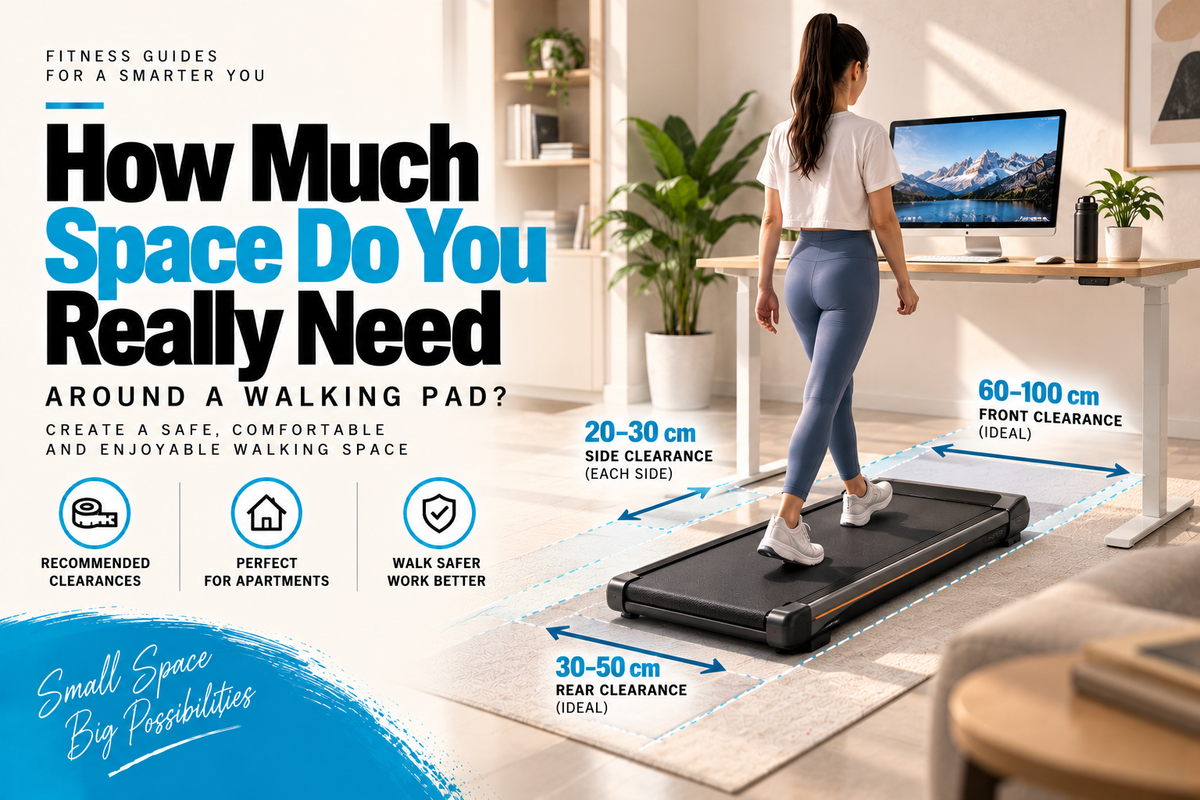
Treadmill Motor for Apartments
For apartment users, motor power isn't the only concern.
You should also consider:
-
Machine dimensions
-
Foldability
-
Machine weight
-
Vibration
-
Foot-strike noise
-
Storage
If you're mainly walking while working or watching TV, a compact WalkingPad may make more sense than a large 3.5+ CHP running treadmill.
Athletix's Walking Pads collection includes compact models designed around home and office walking.
Treadmill Motor for Villa Home Gyms
A villa or dedicated gym gives you more room to prioritize performance.
You may want:
-
3 CHP+ motor
-
Larger running belt
-
15% incline
-
Higher top speed
-
Higher user capacity
-
Premium cushioning
If multiple family members train regularly, investing in a stronger overall treadmill can make more sense than choosing the smallest possible machine.
Treadmill Motor Buying Guide
Here's a quick way to narrow your options:
|
User Type |
What to Prioritize |
|
Casual walker |
Reliable motor + comfort |
|
Daily walker |
Motor durability + cushioning |
|
Walker/jogger |
Around 2.5 CHP+ + good belt |
|
Regular runner |
Around 3 CHP+ + larger deck |
|
Faster runner |
Higher-duty motor + speed + deck |
|
Heavier user |
User capacity + motor + frame |
|
Multiple users |
Durability + motor + cooling |
|
Apartment user |
Size + noise + foldability |
|
Commercial gym |
Commercial-duty overall construction |
Use these as starting points rather than rigid rules.
Treadmill Motor vs Belt Size: Which Matters More?
Both matter.
A powerful motor can move the belt effectively, but the belt still needs to fit your stride.
For running, a larger deck often makes the treadmill feel considerably more comfortable.
For example, the NordicTrack 1250 combines its higher motor output with a 60-inch-long running belt.
That's a more useful combination for running than simply advertising a large motor on a compact walking deck.
Treadmill Motor vs User Capacity
These specifications should also be considered together.
A large motor number doesn't automatically mean a high user capacity.
Maximum user weight depends on the entire machine, including:
-
Frame
-
Deck
-
Rollers
-
Motor
-
Drive system
-
Construction
Always follow the manufacturer's specified user capacity.
Is More CHP Always Better?
No.
More CHP can provide additional performance headroom, but it may also come with:
-
Larger treadmill size
-
Higher price
-
Heavier construction
If you're primarily walking, a properly designed 2.5–2.6 CHP home treadmill may already provide what you need.
If you're regularly running, sharing the treadmill or expecting more intensive use, moving toward 3 CHP or higher can make more sense.
Match the machine to the job.
Where to Buy Treadmills in UAE
Athletix's Treadmills collection includes more than 200 treadmill listings across home, folding, premium, and commercial categories.
Shoppers can compare brands including:
-
NordicTrack
-
ProForm
-
Sole Fitness
-
BowFlex
-
Life Fitness
-
Spirit Fitness
-
Matrix
-
SHUA
-
Afton
-
Kingsmith
-
Sparnod Fitness
-
Marshal Fitness
Instead of sorting purely by advertised horsepower, compare motor type, running area, user capacity, speed, incline, and intended usage.
Related Athletix Collections
If you're choosing cardio equipment for your home or gym, explore:
These collections help users move naturally from researching treadmill motor power to comparing machines suitable for their actual space and workout style.
Related Athletix Guides
Useful internal links for this article include:
Final Thoughts
So, CHP vs HP: which number should treadmill buyers trust?
The answer isn't simply whichever number is bigger.
CHP gives useful context about continuous motor output.
HP is a general power measurement and needs additional context.
Peak HP can describe short-duration maximum output and shouldn't automatically be compared directly with CHP.
More importantly, the motor is only one part of a treadmill.
A good treadmill purchase should consider:
motor + running area + user capacity + speed + incline + cushioning + usage frequency + warranty.
For casual walking, you probably don't need the biggest motor available.
For regular running, a stronger continuous-duty motor combined with a larger deck and stable frame becomes more important.
For multiple daily users or commercial environments, overall durability matters even more.
So the next time one treadmill says 2.6 CHP and another shouts 5 HP, don't immediately assume the second one wins.
Ask:
Is that continuous or peak power—and is the rest of the treadmill actually built for how I plan to use it?
That's the comparison that really matters when choosing a treadmill for home or gym use in UAE.